Technology in Jewellery
From Imagination to Reality: Our Ring Builder and Bespoke Service
I have made this guide to offer you an insight and understanding into how these two services work, why they exist, and which one is right for you.
Copyright Universal Jewellery Limited 2026 | Company number: 11339738
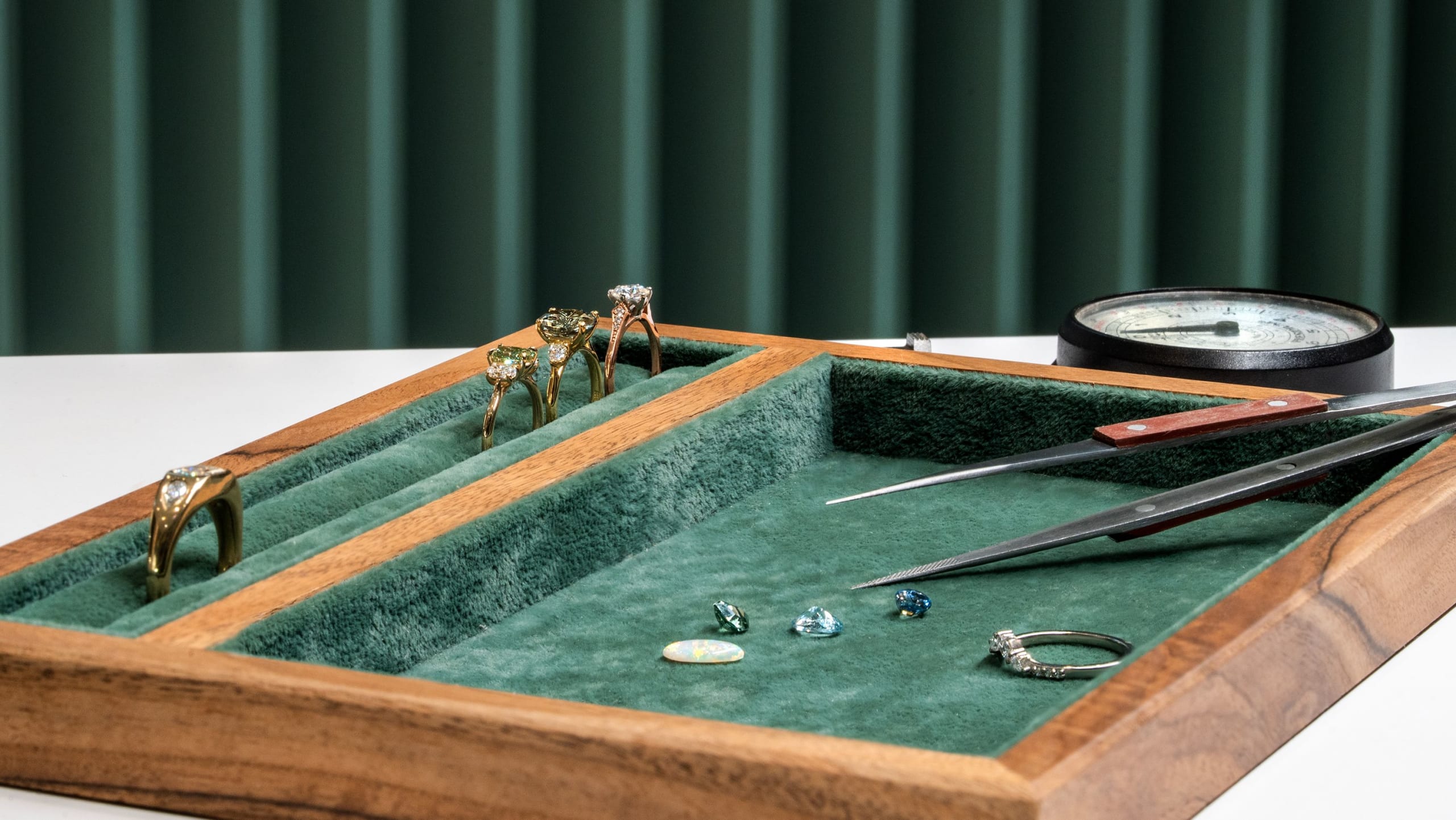
If you've visited us in the Jewellery Quarter, you'll have seen the showroom. What you won't have seen is what's behind it: the workshop. Benches, torches, the polishing motor humming away, someone bent over a ring under a lamp. It's the reason people come to us: everything is made here, by hand, by people you can talk to.
What you definitely won't have seen is the other workshop. It has no benches and nothing catches fire (usually). It's where our website lives, where the system our team uses every day was built, and where the tools that show you a ring in rose gold instead of platinum come from. I run that one. I'm Ben, Head of Technology at Aardvark, and I wanted to explain a bit about how it works, because I think it's a big part of why we can do things other jewellers can't.
Most businesses our size buy their technology in. The website comes from a template company. Bookings run through someone else's booking tool. Stock lists arrive as a spreadsheet from a supplier and somebody types them in. There's nothing wrong with that; it's how most of the high street works.
But buying in comes with a catch. When you want something to work differently, you're waiting on somebody else. You raise a request, it goes on a list, and if enough other customers want the same thing it might turn up next year. In the meantime, you work around it.
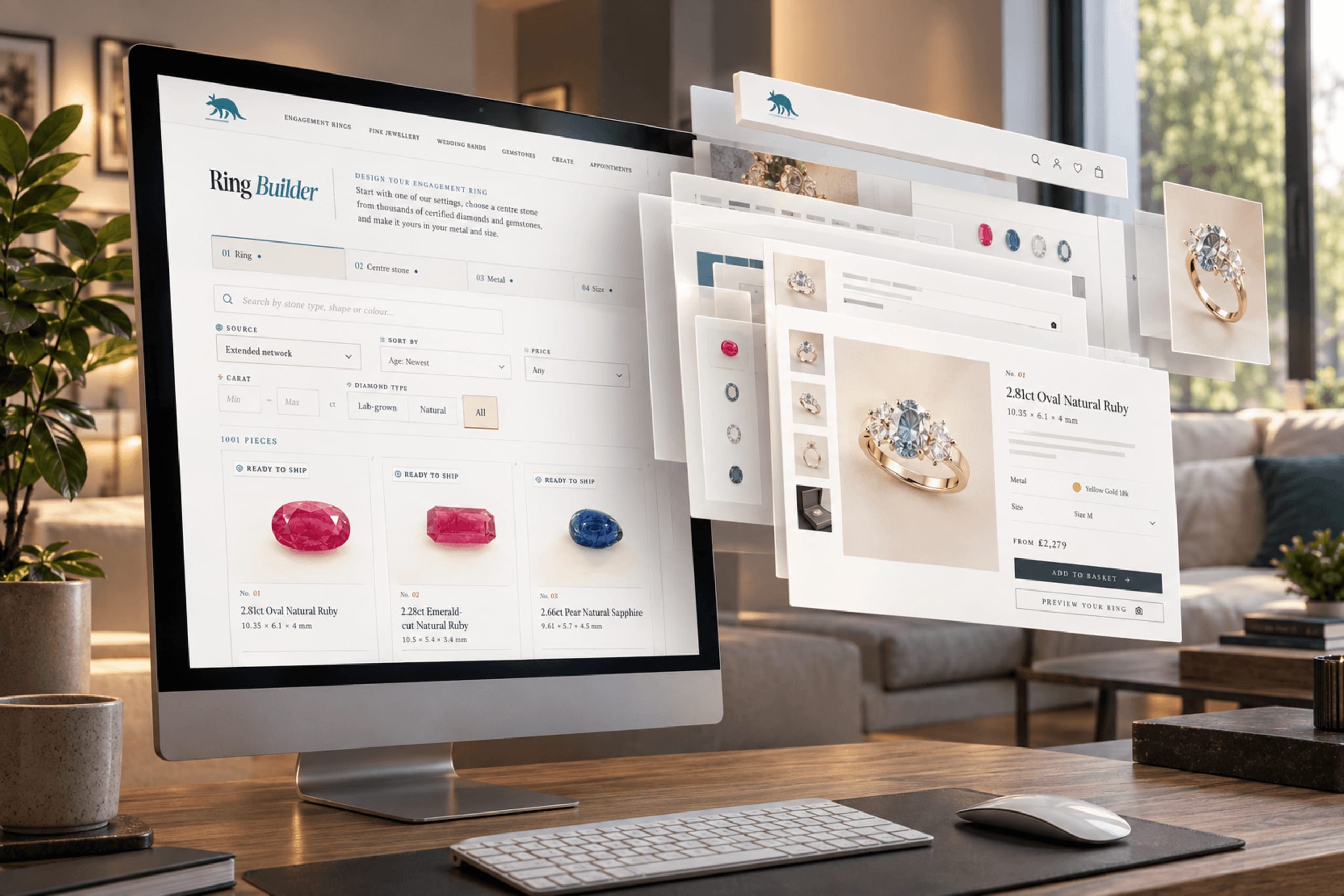
We took a different route. Everything behind the scenes at Aardvark was built here, from a blank page. The website. The system our team uses every day for appointments, orders and every stage of a piece moving through the workshop. The connections that link us directly to our stone suppliers. The ring designer that shows you a stone sitting in a setting before anyone has picked up a tool. None of it is off the shelf. All of it was designed around how we actually work, rather than how a generic jeweller is supposed to work.
Because jewellery is a fast-moving market, and being able to change things quickly matters more than people expect. A few examples.
The gold price. Anyone who's looked at it recently knows it doesn't sit still. When it moves, a jeweller has a choice: reprice hundreds of products by hand, or leave prices alone and quietly hope it comes back down. Because our pricing is our own, we can update it across the whole range in an afternoon. The price you see is today's price, not last quarter's.
Launching something new. When someone in the workshop or the showroom has an idea on a Monday, whether it's a new way to book, a new collection, or a better way to help you choose a stone, there's no vendor to ask and no roadmap to wait for. We build it. It's often live by the end of the week.
Fixing friction. We pay attention to how people actually use the site. If we notice customers getting stuck at a particular step, say picking a ring size or filling in a form that asks one question too many, we change it the same day. Not "we'll flag it with our provider". The same day.
Our internal system deserves its own mention, because it's the part of our technology that's most invisible to you and most important to us. When you book an appointment, that's where it lands. When your ring moves from design to casting to setting to polishing, it knows where it is. When you email to ask how it's going, the person answering can see the whole story in one place.
We couldn't buy that, because nobody sells one that works the way Aardvark works. So we made it, and we keep changing it as the business changes. Some of the best ideas for it come from the people on the benches, who'll wander over and say "it'd be handy if it did this". A couple of days later, it does.
The same thinking applies to stones. Rather than a list that somebody updates when they remember to, we're connected directly to our suppliers. When you're looking at a diamond or a sapphire with us, what you see reflects what's actually available right now. You can search for a specific stone yourself, by shape, size and budget, and see what's out there today rather than what was there last month. And if you want something unusual, we can go looking for it without a week of phone calls.
The newest thing out of the other workshop is the one I'm proudest of. Pick a setting on our website, choose a stone, and you see it in place, live, as you change your mind. Swap a round diamond for an oval sapphire, or white gold for rose, and the picture updates in front of you. We use a bit of AI to generate those images, because the alternative is photographing every stone in every setting in every metal, which would take roughly forever.
But the pictures aren't the part I like most. Once you've designed something, you can share it with friends for a second opinion (or a third, or a fourth). You can put it in front of the Aardvark community, where people vote on the designs they love. And if someone else has created something you can't stop thinking about, you can commission it. Somebody's idle Tuesday-night idea becomes a ring on somebody else's hand, made by hand on our benches.
That's the kind of thing you can only do when the whole chain is yours: the designer, the images, the community and the workshop that makes the final piece. Nobody sells that as a package. We'd have been waiting a long time.
Building everything yourself has a downside, and it's this: when something breaks, there's nobody to blame but me. My colleagues will occasionally get a message that says "the system might wobble for ten minutes this afternoon, sorry", and they are very gracious about it.
But I'd take that trade every time. It's the same reason we make rings by hand rather than buying them in. When you make something yourself, you can make it exactly right, and when it's not right, you can fix it.
You don't need to care about any of this to buy a ring from us, and most people never will. But it shows up in the things you do notice. Prices that reflect today's gold price rather than last season's. A booking that goes straight to the people who'll be looking after you. Stones you can actually have, not ones that were available when somebody last updated a list. A ring you designed yourself, with a stone you chose, that you can see before it exists. And when something about the experience isn't quite right, it gets fixed quickly, by someone in the building rather than a ticket in a queue somewhere else.
Everything we put in front of you was made here: the jewellery, and the technology that gets it to you. The workshop you can't see behind the showroom, and the one you can't see behind that. Both built by hand, both built to change.
Two workshops, same idea.